WIIS-Queen's
Women’s Voices in Diplomacy: Shaping International Peace and Security
The annual conference will bring together experts, practitioners, and students to explore the pivotal role of women in global diplomacy, foreign policy, and conflict resolution. Through a series of thought-provoking panels, the conference will highlight women's significant contributions in multilateral diplomacy, humanitarian crisis management, and diplomatic negotiations. Topics will include the underrepresentation of women in institutions like the UN and NATO, strategies to overcome gender barriers in diplomacy, and the unique leadership styles women bring to international peacebuilding efforts. The event will also feature insights into career paths within the field. With a broad range of topics, the conference aims to highlight the importance of female perspectives in shaping the future of international diplomacy.
Join us Sunday, March 2nd, 2024 from 8:30 AM - 4:00 PM at the Historic Donald Gordon Hotel & Conference Centre.
Panels
Panel 1
Women’s Role in Multilateral Diplomacy & Barriers to Women in Diplomacy
As we continue to advance toward a more interconnected world, the importance of women’s leadership in multilateral diplomacy becomes increasingly clear. Yet, despite significant contributions from women in organizations like the UN, NATO, and the African Union, barriers such as gender biases and underrepresentation in leadership persist. Join our panelists as we explore the systemic challenges women face in diplomacy, with a particular focus on initiatives like the UN’s Women, Peace, and Security agenda (UNSCR 1325).
Through an in-depth discussion, we’ll examine the steps being taken to overcome these obstacles, including the need for more female leadership in high-stakes negotiations and strategies to create more inclusive, effective diplomatic spaces. Learn from both diplomats and gender equality advocates as they share insights on how we can build a more equitable future in international diplomacy.
Panel 2
Women Leading Humanitarian Diplomacy and Crisis Management
As the world faces complex crises—whether conflict-induced refugee movements, pandemics, or natural disasters—women have been at the forefront, leading critical humanitarian responses. From advocating for vulnerable populations, including women and children, to resolving global challenges, women diplomats are shaping international peace and security in profound ways.
Join our panelists as we explore the vital role of women in crisis management, and discuss whether their approach to diplomatic negotiations offers a more inclusive, collaborative, and long-term perspective on peace. Drawing on research that highlights how women’s leadership is influencing international security, we’ll delve into the unique contributions women bring to shaping a more peaceful, resilient world.
Panel 3
Life after WIIS-Queen’s
As WIIS-Queen’s continues to shape the next generation of leaders, our alumni are making waves across the world in diplomacy, security, and global affairs. Join us as we hear from WIIS-Queen’s graduates about their journeys since graduation—where their education and careers have taken them, and how the program has impacted their professional growth.
Our panelists will share their unique experiences navigating the field, offering advice and insights for women looking to break into diplomacy and international relations. Learn about the opportunities, challenges, and strategies that can help you chart your own path to success in this dynamic field.
Whether you're just starting your journey or looking to take your career to the next level, this panel will equip you with the tools to thrive in international affairs.
Panel 1
Women’s Role in Multilateral Diplomacy & Barriers to Women in Diplomacy

Dr. Barbara J. Falk
Dr. Barbara J. Falk is Director of Academics and Professor, Department of Defence Studies at the Canadian Forces College/Royal Military College of Canada and Senior Associate at the Munk School for European and Eurasian Studies at the University of Toronto. Her research focuses on trials and the domestic politicization of justice during international conflict, comparative dissent, and national security law and policy. She is the author of The Dilemmas of Dissidence: Citizen Intellectuals and Philosopher Kings, Making Sense of Political Trials: Causes and Categories and numerous book chapters and articles on the philosophy of Václav Havel, comparative dissent, national security, and political trials. Before her career in academia, she worked for 10 years in human resources and labour relations in the public and private sectors.

Dr. Maggie Shepherd
Maggie Shepherd is the Associate Dean of Graduate Studies at the Royal Military College of Canada, holding a cross-appointment between the department of Management and the department of Defence Studies at the Canadian Forces College (Toronto). Moving from the Maritimes to complete her studies, Maggie is a graduate of Laval University, RMC (Kingston), and went on to complete a post-graduate program on Negotiation through Harvard. Her doctoral work is a study from a Canadian context on the impact of social media on small and medium businesses. Understanding influence and complex change are integral to her varied roles as a professor, a consultant, and researcher. As a scholar-practitioner, Maggie focuses her research on practical outcomes and improving real-world application. Her research interests include strategy and leadership; influence and negotiation; and human security and Women, Peace and Security. With a career in the federal government and higher education spanning 27 years, Maggie has held various senior academic administrative roles, including the Chair of the MBA program and positions as Interim Dean of Graduate Studies and Associate Vice-Principal.

Dr. Vanessa Brown
Dr. Vanessa Brown is an assistant professor in the Department of Defence Studies at the Canadian Forces College. Dr Brown has held various Department of National Defence research and advisory roles, including as an Assistant Professor with the Dallaire Centre of Excellence for Peace and Security as well as Gender Adviser to the Commander of the Canadian Defence Academy. Her research interests include militarized masculinities and femininities; equity, diversity, inclusion, and Indigeneity; Women, Peace and Security; feminist interventions in international security; international normative frameworks of security; and Canadian Foreign and Defence Policy. She has also published in a number of edited books including Rethinking Military Professionalism, Teaching Culture at Military Academies; Culture and the Soldier: How Identity, Values, and Norms Intersect with Contemporary Military Engagements; and From “Knowing” to “Doing”: International Perspectives on Leading Effectively.

Dr. Meaghan Shoemaker
Dr. Shoemaker is passionate about leading and contributing to initiatives that champion human rights and organizational culture change. She holds a PhD from Queen’s University with specializations in International Relations and Gender. She currently facilitates Canada’s participation in international organizations such as the United Nations with regard to gender equality. Previously, Dr. Shoemaker led human rights and inclusion programs and policies for the Canadian Armed Forces, and continues to provide training and education for national militaries, facilitating conversations with members across all ranks on the topics of emotional intelligence, mentorship, and unconscious bias. Dr. Shoemaker is currently a Research Fellow for the Queen’s University Centre for International and Defence Policy (CIDP). Through the CIDP Gender Lab, she has led projects related to veteran transition and employment, military mentorship, and Gender Based Analysis Plus
Panel 2
Women Leading Humanitarian Diplomacy and Crisis Management

Giovanna Cioffi
Giovanna is a communications and security professional based in Ottawa, specializing in OSINT for public safety with a PhD from York University. A military reservist with 17 years of service, she has deployed on multiple domestic and international operations, working in counterterrorism, hostage rescue, information operations, and civil-military cooperation. As Senior Intelligence Analyst at Sapper Labs, she supports military operations, designs OSINT training for government agencies, and counters information operations and influence campaigns. A strong advocate for women in crisis management and humanitarian diplomacy, she emphasizes the role of intelligence, technology, and civil-military cooperation in global security. Outside of work, Giovanna enjoys hiking and the outdoors, balancing her professional and personal pursuits.

Kristine St-Pierre
Kristine St-Pierre is a gender equality and Women, Peace, and Security (WPS) adviser, researcher, and trainer. She currently serves as a Gender Adviser at the Canadian Defence Academy and a Gender, Women, Peace and Security Trainer with the Royal Canadian Mounted Police. With extensive experience in police reform and peacekeeping, she has worked on projects in Latin America, Sub-Saharan Africa, and Ukraine, including the creation of the Ukrainian Association of Women in Law Enforcement. She has written and presented widely on gender, peace, and security and has served as a steering committee member of the Women, Peace and Security Network - Canada. Kristine holds a BA from the University of Ottawa and master’s degrees in Journalism and International Affairs from Carleton University
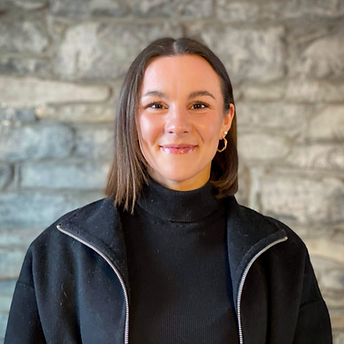
Marie-Pier Allard-Caron
Marie-Pier is a Ph.D. candidate in Political Science at Queen’s University, co-supervised by Dr. Stéfanie von Hlatky and Dr. SarahMyriam Martin-Brûlé. Her research is looking at soldier preparedness in the context of noncombat mission, with a particular focus on predeployment. She holds the position of Events Coordinator and Emerging Researcher at the Network for Strategic Analysis (NSA), and she is also a member of the FRQS research group Mondialisation Sous Tension. Originally from Quebec, she earned a Bachelor’s degree in Political Science and International Studies from Bishop’s University in 2021 and completed a dual Master’s degree in Political Science and European Studies at the University of Montreal and the Catholic University of Louvain in 2023. Her broader research interests include peace operations, international security, and gender in the context of armed forces.
Panel 3
Life After WIIS-Queen's

Morgan Fox
Morgan is currently an MA Candidate in European and Eurasian Studies at the University of Toronto, where she focuses on international peace and security. Previously, she worked as a Program Associate at Project Ploughshares, a peace and disarmament civil society organization. Before this, Morgan completed her undergraduate degree in Politics, Philosophy, and Economics at Queen’s University. While there, she was a member of WIIS-Queen’s, including as Co-President in 2022. In her previous position as an Undergraduate Researcher at the Centre for International and Defence Policy, she notably examined NATO’s implementation of the Women, Peace, and Security Agenda. Her research interests extend to the complexities of violent extremism and sexual misconduct in the Canadian Armed Forces. Morgan is particularly passionate about exploring gender dynamics and security sector reform in post-conflict settings in Eastern Europe.

Owen Wong
Owen Wong is a Policy Advisor to the Ambassador for Women, Peace and Security at Global Affairs Canada. While obtaining his master's degree, Owen was a researcher at the Centre for International and Defence Policy, contributing to projects funded by the Department of National Defence and the Canadian Defence Academy. His research focuses on women, peace and security, and the macropolitical regulation of ethnic conflict. Owen has also presented at international conferences, including the NATO Youth Summit in Miami and the European Academy of Bolzano.

Jenna Ghassabeh
Jenna completed her undergraduate studies at Queen's University, where she earned a Bachelor of Arts and served as the President of Women in International Security (WIIS) in 2019. Her leadership during this time showcased her commitment to advancing discussions on gender and security. Jenna furthered her education by completing a Master's in Political Management at Carleton University, equipping her with the skills to navigate the complexities of political landscapes. She currently serves as the Lead Press Secretary at the Office of the Prime Minister of Canada, where she plays a crucial role in shaping communications and public engagement. With her strong academic background and practical experience in the political arena, Jenna brings valuable insights to our discussion